

Uluwatu Surf Seasons & Tide Guide
Uluwatu is surfable year-round, but the right tide and the right season decide whether a break is a world-class wave or a dangerous shut-down. Here is how to read both before you paddle out.
Written by Local Surfers
Updated for 2026
Covers Every Bukit Break
Lessons Available All Levels
The Bukit Peninsula is one of the most tide-sensitive stretches of coastline in Indonesia. Nearly every well-known wave here — Uluwatu, Padang Padang, Bingin, Impossibles — breaks over a living reef, not sand. That single fact changes everything about when you should paddle out, and it is the first thing we brief every visiting surfer on, whether they are booking a lesson or already know how to surf.
This guide covers the two things that actually decide your session: the season (which sets the swell and the wind) and the tide (which sets whether a given reef is safe and rideable at all, on any given day). Treat it as a planning tool before you book, not a replacement for checking a live tide chart and swell forecast on the day.
Dry Season (April–October): the reliable window
From roughly April through October, Bali sits in the dry season and the trade winds blow consistently from the southeast — which means offshore on the Bukit's west-facing coast. Offshore wind holds wave faces up and clean, so mornings and even full days can stay glassy. Combined with the reliable southern-ocean swell that peaks around June to August, this is why the dry season is considered the Bukit's prime surf window and the busiest tourist period at every break we teach at.
The trade-off is crowding. The same reliability that makes July and August excellent for surfing also makes line-ups at Uluwatu, Padang Padang and Bingin genuinely packed on a good day. If you want the most consistent conditions, this is your window. If you want a quieter line-up, read on.
Wet Season (November–March): smaller crowds, more variability
November through March brings Bali's wet season: more rain, less consistent wind (it swings onshore more often, especially in the afternoon), and a higher chance of a flat or messy spell lasting a few days. But it is not a write-off — swell still arrives, mornings are often still clean before the sea breeze fills in, and the crowds thin out noticeably at every spot on this list.
We run lessons and guiding through the wet season too. The main adjustment is timing: we lean harder on early starts (see below) and we are more flexible about which break we use on a given day, since conditions can shift spot to spot more than they do in the dry months.
Tide: the factor that actually keeps you safe
Season decides the swell. Tide decides whether a specific reef is a wave or a hazard on a specific day — and it changes every six hours, so "is Uluwatu good today" has a different answer at 7am than it does at 1pm.
As a rule across the Bukit's sharp-reef breaks (Uluwatu main peak, Suluban/Racetracks, Padang Padang's main reef, Bingin, Impossibles): low tide exposes the reef shelf, making the wave thin, fast and genuinely dangerous to fall on. These breaks generally want mid tide to high tide to have enough water covering the reef to ride safely and with real shape. The sand-backed or more sheltered spots — Balangan's inside, Dreamland's inside reform, Jimbaran Bay, Nyang Nyang's beach section — are far more tide-tolerant and are exactly why we default to them for beginner lessons regardless of the tide chart.
- Sharp-reef breaks (Uluwatu, Suluban, Padang Padang main, Bingin, Impossibles): best from mid to high tide; avoid at the lowest low tide.
- Sand-influenced or sheltered breaks (Balangan inside, Dreamland inside, Jimbaran, Nyang Nyang beach): workable across most of the tide cycle — our default for lessons.
- Always check a live Bali tide table for the day you are surfing — tide times shift by roughly 20-40 minutes earlier each day and a "high tide at 9am" guideline from last week will be wrong this week.
Best time of day
Early morning (roughly 6:30–9:00am) is consistently the cleanest window on the Bukit, dry season or wet. The trade wind has not picked up yet, so the surface stays glassy and the wave faces are easier to read — which matters even more for a first-timer than for an expert. In the dry season, conditions often hold clean most of the day; in the wet season, the afternoon sea breeze and any building cloud cover tend to roughen things up faster, so we book lesson slots earlier when we can.
Quick reference: tide behaviour by spot
Every location page on this site states the specific tide and crowd picture for that break, kept current as part of our local knowledge. Use the links below to go straight to the spot you are considering.
Every Bukit Spot, At a Glance
Full access, tide and crowd detail lives on each spot's own page.

Suluban
All levels - beginners nearby, reefs for improvers
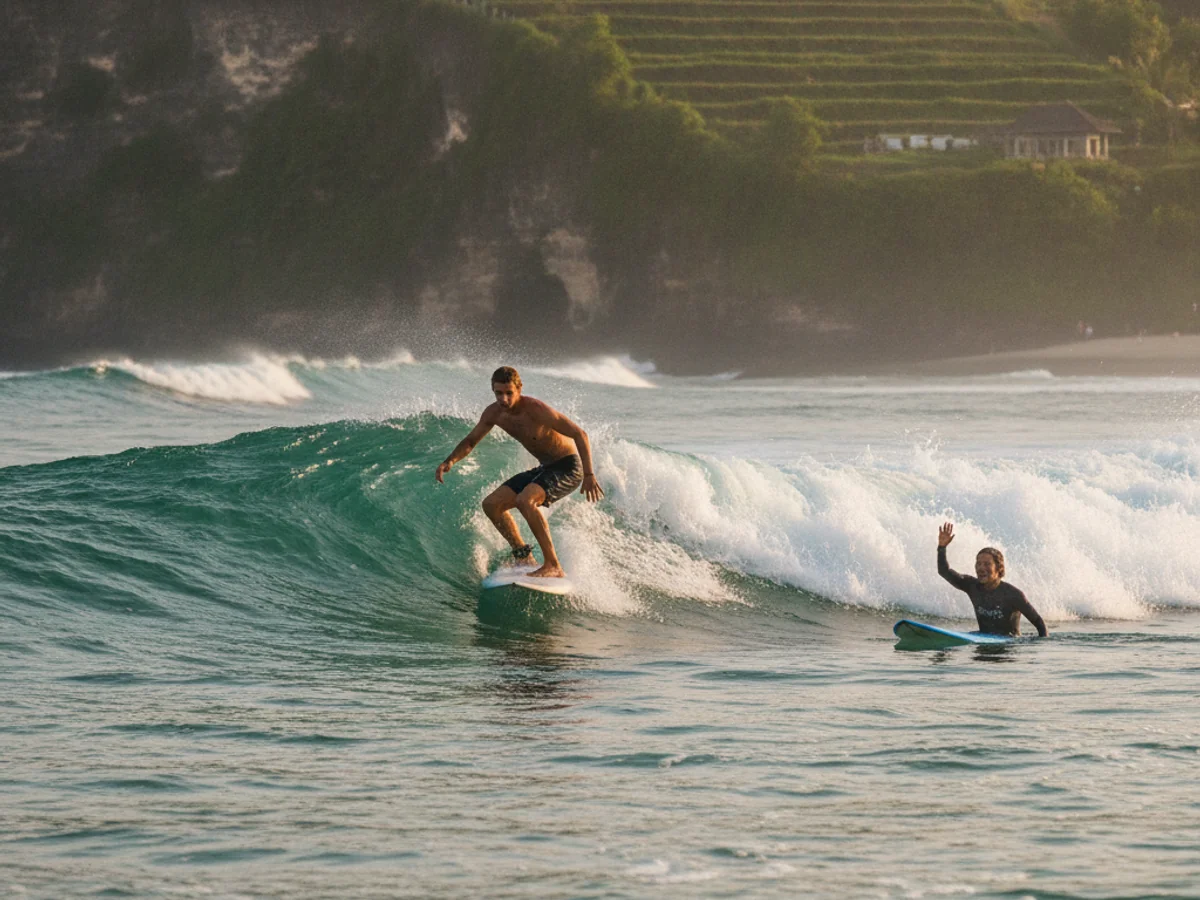
Padang Padang
Beginners on Baby Padang, advanced on the main reef

Bingin
Intermediate surfers ready for reef breaks

Balangan
Beginners and intermediates in a stunning setting

Dreamland
Intermediate surfers improving turns and power
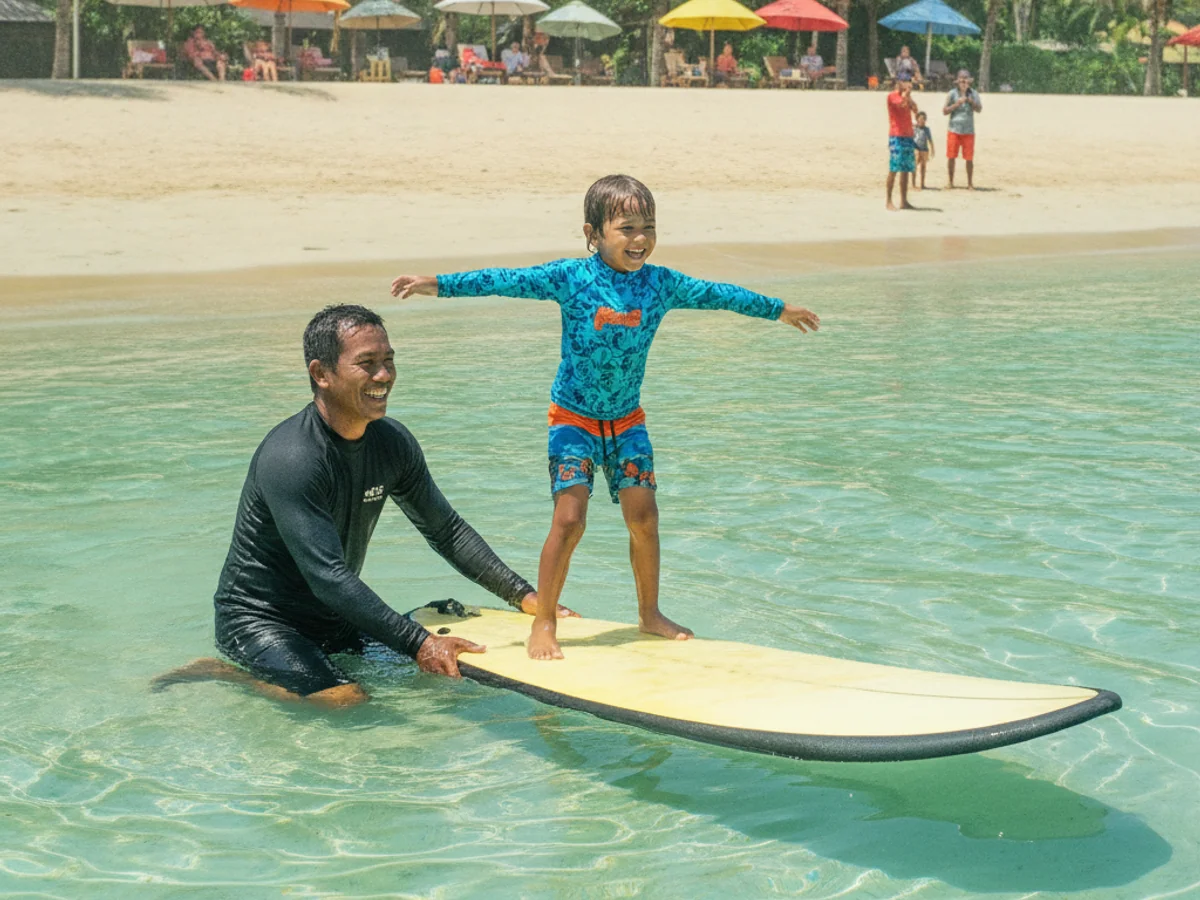
Nyang Nyang
Beginners wanting a quiet, uncrowded session

Jimbaran
Beginners and families wanting calm conditions
Nusa Dua
Intermediate surfers chasing clean east-coast reef
What Our Students Say
Real reviews from surfers who learned with us on the Bukit
“First time surfing ever and I stood up on the board within 30 minutes! We started on a gentle beach break before the reefs. The instructor was patient and really knew the Bukit. Best activity we did in Bali.”
Jake R.
Australia - Verified
“Took the private lesson at Bingin and it was worth every rupiah. My instructor tailored everything to my level and I finally understood reef positioning. Already booked another session at Padang Padang!”
Sophie M.
United Kingdom - Verified
“We did the group lesson as a couple and had an absolute blast on the Bukit. The instructor handled both of us perfectly even though I was a complete beginner and my wife had surfed before.”
Carlos & Maria
Spain - Verified
“My 8-year-old had the best time at her kids surf lesson! The instructor picked a safe, gentle spot and was so patient. She was standing by the end and begging to go again the next morning.”
Lisa T.
Germany - Verified
“Booked the surf guiding and it completely changed my trip. The guide read the swell and tide and took me to Balangan when Uluwatu was maxing out. Caught the best waves of my life. Legit local knowledge.”
Tom H.
United States - Verified
“Did the intermediate lesson and my reef surfing improved massively. Proper wave reading, bottom turns, and lineup positioning at the Bukit reefs. Not a tourist trap, real coaching.”
Anna K.
Netherlands - Verified
Ready to Book a Lesson?
Transparent pricing. Surfboard and equipment included in every lesson.
Uluwatu Surf Seasons & Tide Guide - FAQ
What is the best month to surf Uluwatu?
Is low tide dangerous at Uluwatu?
Does Bali's rainy season ruin surfing?
What tide is best for Padang Padang?
How do I check the tide before a lesson?
Which Bukit spots work regardless of tide?
Ready to Surf the Bukit?
Tell us your level and preferred dates on WhatsApp — we match you to the right break and instructor.
Book on WhatsApp